
 |
The Quest for the Perfect Game - Reviews to Extract the Essence of Games by Nicholas Hjelmberg | |
































|
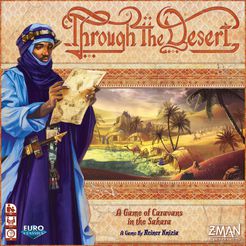
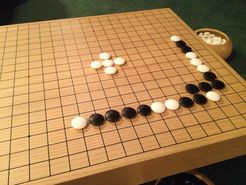
Through the Desert - Through the not so Deserted Desert (Published 19 February 2018)This review has also been published at Boardgamegeek.The Tile-Laying TrilogyThrough the Desert is the third game in Reiner Knizia's Tile-Laying Trilogy after Tigris & Euphrates and Samurai. All those games are unique but Through the Desert may very well be the most unique. The DifferencesFirst of all, you do not place tiles but colorful camels. Functionally there is no difference compared to tiles but the camels do stand out on the board, for better or worse. Some players shudder at the very thought of playing with pink plastic camels while color-blind players find it difficult to tell the camels apart. If you belong to either category, Through the Desert is not for you. Otherwise, please read on. Second, the placement of the tiles is restricted to hexes adjacent to previously placed camels. (After all, camels like caravans, don't they?) This makes placement much more restricted than in the other games of the Tile-Laying Trilogy. Third, the area control is not exercised through placement in areas but rather around areas created by the players themselves. Wait, haven't we seen this before? Yes, Go came up with this idea some 2 500 years ago (without the camels though). So can an ancient game really be renewed with a straightjacket and some plastics? As a matter of fact, yes. Let us learn more about what is on the mind of those creatures. 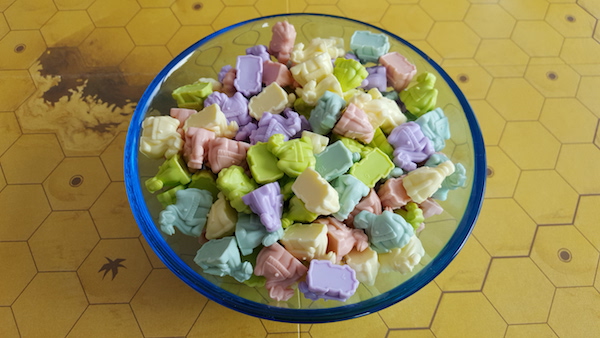
How do I Go?As mentioned above, camels stick to each other. At the start of the game, you place one camel of each of the five different colors on the board and identify each of them with a rider of your color. All following camels must be placed next to a camel of its own player and own color. Thus, each player will manage five caravans. This is indeed more restrictive than Go, where you can place a stone anywhere on the board. On the other hand, it is generally preferable to have few but meaningful decisions in a casual game. While it is difficult to assess whether a placed stone in go is good or not, new camels in a caravan are often good. The tricky part is to choose the right direction and the right caravan, questions that give you enough decisions to consider. 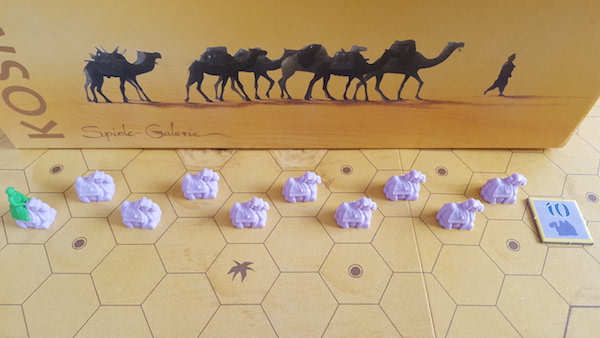
Where do I Go?Since you are in a desert, you go to the water. Duh! The two most obvious ways to score is to place your camels on water hole tiles (which earns you 1-3 victory points as printed on the tile) or next to a palm tree (which earns you 5 victory points). That may sound easy but remember that you cannot go there by yourself, you have to build a caravan all the way there. Also remember that there are other camels in the desert that will do all they can to beat you to the valuable spots. 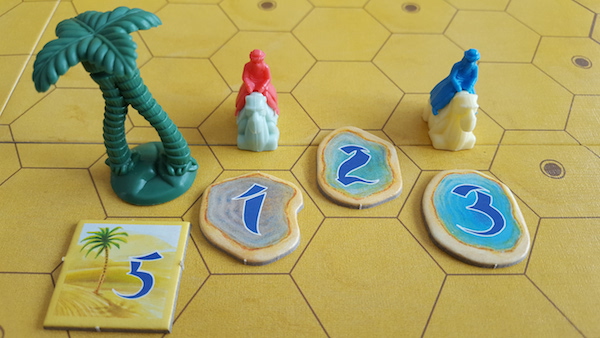
With Whom do I Go?With whoever is closest to the valuable spots? No, there is more to this decision. Did you wonder why it was necessary with five different colors of camels? One reason is that opponent camels of the same color can not be placed next to each other. This is not only because it would be difficult to tell them apart but also because it can be used to block opponent caravans and cut them off from valuable areas. Another important reason is the third way to score: the longest caravan of each color scores 10 victory points. So should you reach out for a water hole for 1 victory point or extend another caravan for potentially 10 victory points? Well, if you think that is a difficult question, wait till you learn about the fourth way to score. 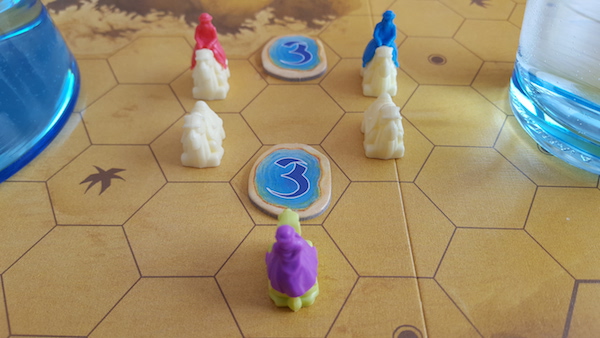
"The camel corridor". Neither Red nor Blue can claim the precious water holes since they are both riding white camels. Purple can simply ride between them and claim all the water. When do I Go Home?Through the Desert would not be similar to Go without offering benefits for enclosing areas. It is actually enough to surround a water hole or a palm tree to score for it, using the edge of the board or the central hill as a border if necessary, provided that there are no other camels in the area. But this is not the only reward. Each enclosed hex scores 1 victory point, something that can amount up to 20 victory points or more if you are successful. Hence, Through the Desert is not a race game for points, it is also a blocking game to prevent opponent points. 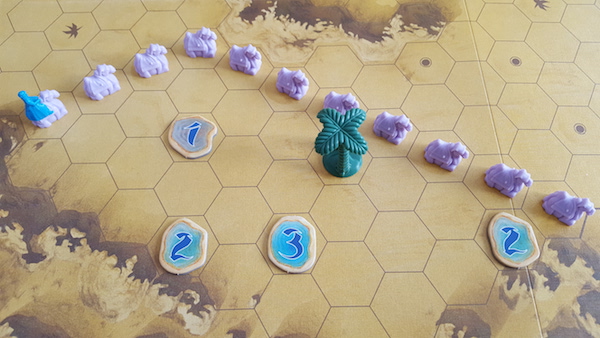
"Get off my lawn". Purple scores 5 VP for the palm tree, 8 VP for the water holes and 26 VP for the enclosed hexes. When am I Done?The game end is in the hands of the players. As soon as a color runs out of camels, the game is over. This is another factor to take into account when placing your camels. Will you have time to enclose that big area? Will there be enough camels to make your caravan longer than that of your opponent? Or should you simply rush the game yourself to thwart your opponents' plans? The Camel between the HaystacksThe four different ways of scoring are often difficult to combine. You can have both a water hole and a palm tree within reach but will you be the first to both? You can extend all your caravans to score all over the board but will that not give up the longest caravan bonus to your opponents? You can give up the tempting points on the board and try to enclose an area instead but will you have enough time? To win Through the Desert, you need to balance carefully between finding the scoring opportunities for yourself while also denying your opponents from scoring. 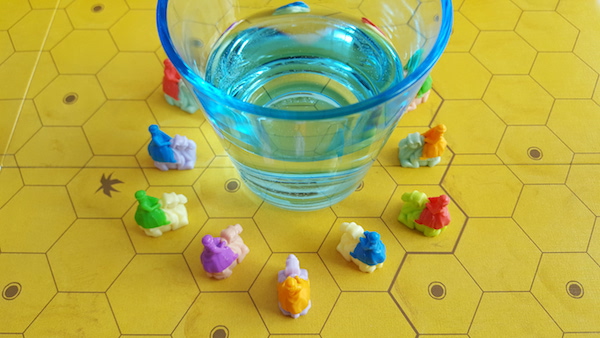
Is Through the Desert for Everybody?Through the Desert is a good gateway for new players. Not only are the camels likeable among children (but not too young children - those camels look very much like to candy) but the rules are easy and there are always points to grab. The more seasoned player will find challenges in the balancing act of scoring and blocking. However, there are two potential issues with Through the Desert. One is that the initial placement can be quite important. This can be particularly critical if a player gets a corner for himself or herself to enclose or if two similar colors end up so close to each other that none will score very much. However, my experience is that as long as you spread out, you will avoid those issues. You should not worry too much about camels that never start any caravan - it is quite common that you focus on just two or three of your colors. A more critical issue is that players may be faced with the decision to give up points to block an opponent or focus on own points, leaving it to the other players to do the blocking. There may be scenarios where players inadvertently get the role of kingmaker but those scenarios are rare if all players are skilled and go for victory. Personally, I still prefer Tigris & Euphrates and Samurai but Through the Desert is a worthy member of Reiner Kinizia's Tile-Laying Trilogy. 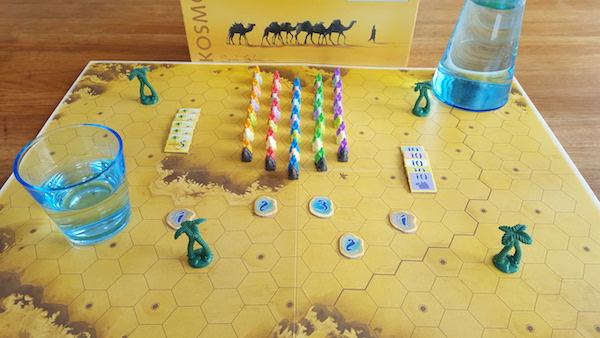
|
|