 |
The Quest for the Perfect Game - Reviews to Extract the Essence of Games by Nicholas Hjelmberg | |





















|
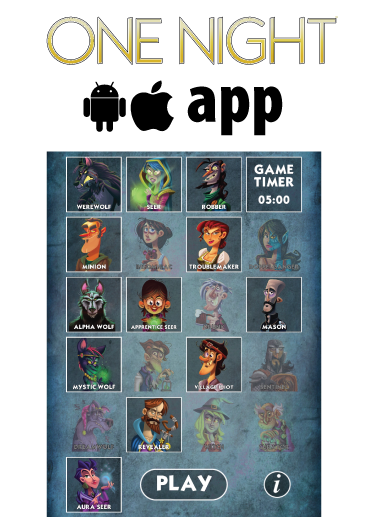
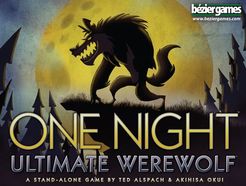
One Night Ultimate Werewolf - The Blame Game (Published 5 March 2018)This review has also been published at Boardgamegeek. Is this a Game?This is the question we asked ourselves when One Night Ultimate Werewolf was brought to the table for the first time. We had been dealt one card each, telling us which roles we played in the little village haunted by werewolves. We had closed our eyes and listened to the very clear instructions read to us by the free app. Some of us had, unknowingly to the others, fiddled with the cards according to the instructions. With that, the night phase had passed and the day phase began, but we were still left in the dark. 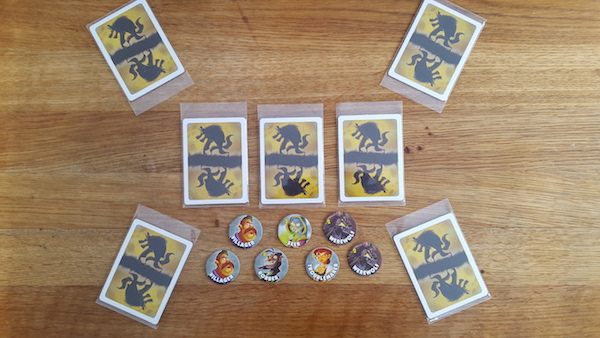
What were we supposed to do now? The goal was clear to us all: we had five minutes to find and hang one of the up to two werewolves among us. Success would give the victory to all non-werewolf players while failure would give the victory to the werewolves. But how could we possibly find the players with the werewolf cards? How could we even know our own cards after they had possibly been fiddled with? We were all acquainted with games like Avalon, but there you knew your role for sure and you could observe the actions of the other players to draw conclusions. In this game, we had nothing to work with. Or did we? Cautiously and gradually, we began to put together the jigsaw puzzle of the past night. Player A revealed that she was the seer and had indeed seen the werewolf card with player C. Player B revealed that she was the troublemaker and that she had switched player C's card with player D's card. The case seemed clear, player D was now a werewolf and we only needed to vote him out to win. But then player D claimed that he had robbed player C and left his card there so if the cards had been switched, the werewolf card should still be with player C. Player C firmly denied this, admitting that he had indeed started as werewolf but claiming that player B also had started as a werewolf and not as a troublemaker. Hence, she couldn't have switched the cards and hence, player B and player D should now be werewolves. What seemed like a simple deduction game turned into a blame game as people started accusing each other for lying and it wasn't until the end that we found out the truth. 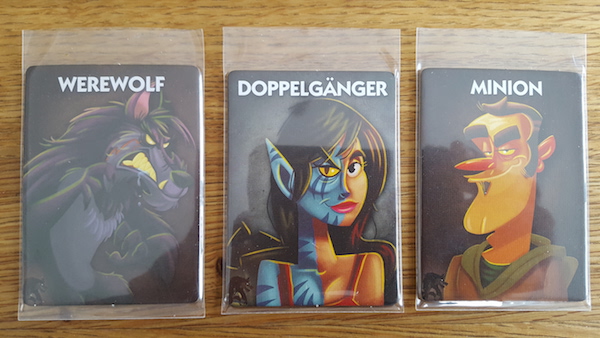
No, it's an AddictionOur first game of One Night Ultimate Werewolf was immediately followed by another game and another and another. Let's look at what made this such an addictive experience for us. The Limited InformationThe purpose of all good social deduction games is to give only pieces of the truth to the players and let them use their social and deductive skills to find out the rest. In One Night Ultimate Werewolf, the only information you can be sure of is the card you started with and that may very well have changed during the first night phase of the game. If you accumulate the information of all the players, you will have perfect information about the past events and the current state. 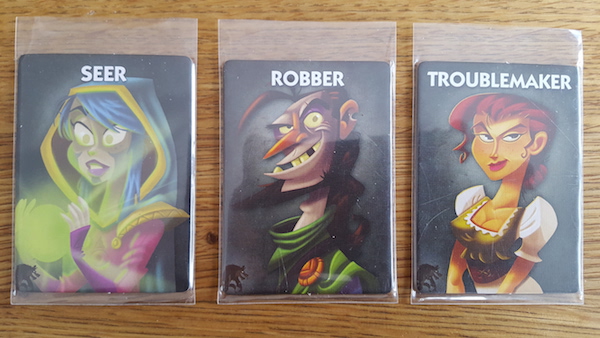
But will this information be readily shared among the players? No. 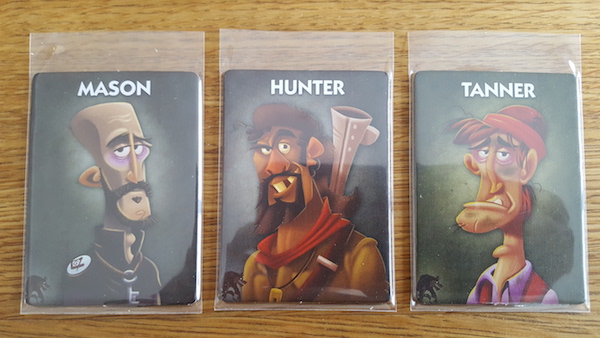
The Uncertain TeamsA good mechanic of a social deduction game is that you have to cooperate with the members of your own team but not reveal yourself or your teammates to the other team. In One Night Ultimate Werewolf, there is a "good" team (the Villagers) and a "bad" team (the Werewolves) but since you don't know which team you belong to, you can't give away all the information either. Instead, you have to tread carefully to find which the teams are and which team you are in. Give away too much information and it may help your opponent team but give away too little and it may distance you from both teams. I've seen games where players openly share all the information they have, only to end up proving that the werewolf card ended up in front of themselves. I've also seen games where players wait to the very last to share the final piece of information that finally reveals the truth, only to be distrusted because they kept quiet so long. The InteractionOne Night Ultimate Werewolf is a highly interactive game. Whether your current situation makes it best for you to talk or to be quiet, you will have to listen to what everybody else says and chime in to steer the arguments towards the conclusion that you think is the right for yourself. The Variable SetupThere are many roles that you may mix and match in One Night Ultimate Werewolf. This not only adds variation to the game but also let you adjust the balance if one side tends to wins more often than another. The Time LimitA game of One Night Ultimate Werewolf lasts only ten minutes - five minutes for the setup and the night phase and five minutes for the day phase. This means that it's easy to play several times in a row and although each session stands alone, there is a sense of progress over the sessions as the players see patterns in the interaction and bring on experience of previous sessions into the next ones. The Player CountWhereas most social deduction games shine at higher player counts, One Night Ultimate Werewolf plays well with as few as three players. In my opinion, it's best with five to six players (less may feel repetitive when players learn the interaction pattern of the group, more may feel too chaotic during the argumentation) but it certainly works with all player counts.
|
|