
Home Game Rules Theme Strategy FAQ


Theme

In spite of being rather abstract, almost all mechanics are based on the theme of the game: The Warring States. Let's start with the states themselves.

The Warring States

The twelve states of the game are based on some of the actual Warring States: Jin 晉, Yan 燕, Qin 秦, Zhongshan 顧, Qi 齊, Shu 蜀, Zhou 周, Song 宋, Wu 吳, Ba 巴, Chu 楚 , and Yue 越. Only the names have been used while any economic, political, geographical and other characteristics have been ignored since there are mechanical differences between the states in the game.

The Dynasties

Five of the most prominent states are selected as dynasties or player colors: Jin 晉, Yan 燕, Qin 秦, Qi 齊, and Chu 楚. Their characteristics have been described by Master Wu and used in the game as the unique abilities of each dynasty.

  • The Yan (Defensive) are a sincere and straightforward people. They act prudently, love courage and esteem righteousness while rarely employing deception. Thus they excel in defensive positions, but are immobile and inflexible.
  • The Qi (Offensive) are unyielding and their country prosperous. Qi's army is arrayed with their heaviest hitters at the front while the rest follow behind, so that even when their forces appear mighty are in reality fragile.
  • The Chu (Well-ordered) people are soft and weak. Their lands stretch far and wide, and their troops are weary and although their formations are well-ordered, they do not have the resources to maintain their positions for long.
  • The Qin (High in morale) are ferocious and their terrain is treacherous. The government's decrees are strict and impartial. Qin soldiers are brave and high in morale so that they are able to scatter and engage in individual combat.
  • The Jin (Experienced) Jin are a gentle people, weary..from war and experienced in arms, but have little regard for their generals. Although their troops are experienced, they cannot be expected to fight to the death.

The Tactics cards

The symbols of the tactics cards are based on the main weapons during the Warring States period.

  • The chariot remained for long a major factor in Chinese warfare and it was only near the beginning of the Warring States period that there was a shift. However, it did retain its prestige and importance.
  • The massed infantry made warfare bloodier, reduced the importance of the aristocracy and hence made the kings stronger and more despotic. Their most popular weapon, the dagger-axe, is used the tactics symbol.
  • The crossbow was invented during the Warring States period and have been found with the terracotta army.
  • The first cavalry unit was formed in 307 BC by King Wuling of Zhao. and used as horse archery.
  • Espionage is a more time-less warfare but Sun Tzu devoted it one full chapter in his Art of War so the spy is a suitable symbol for this special "choose what happens next" tactics in the game.

The Strategy cards

The symbols of the strategy cards are based on the famous quote from Sun Tzu's Art of War:

When campaigning, be swift as the wind;
in leisurely march, majestic as a forest;
in raiding and plundering, like fire;
in standing, firm as the mountains.

The special powers of each of those strategies were simple to link to Sun Tzu's words. The movement of own armies became the swift wind while the movement of others' armies became the raiding fire. The strong "double army" on top of an own army outside a state became the firm mountain and the "infiltrating army" beneath an army in a state became majestic army. (Perhaps it impresses the inhabitants of the state?)

The Advisor cards

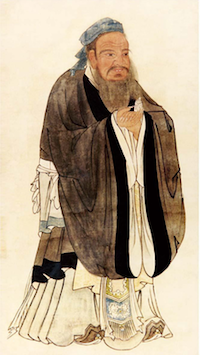
Although Confucius lived before the Warring States period, his influence on the Chinese society earned him a place on the advisor cards, which allows the players to play 1 extra card. Whether he would have approved of the wars is another matter...

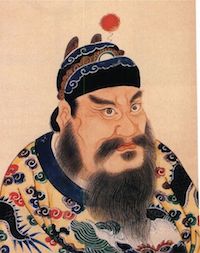
Qin Shi Huang Di


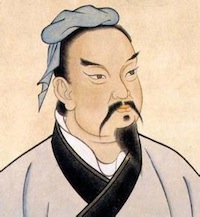
Sun Tzu


Confucius