 |
Home | Game | Rules | Theme | Strategy | FAQ |  |












































|
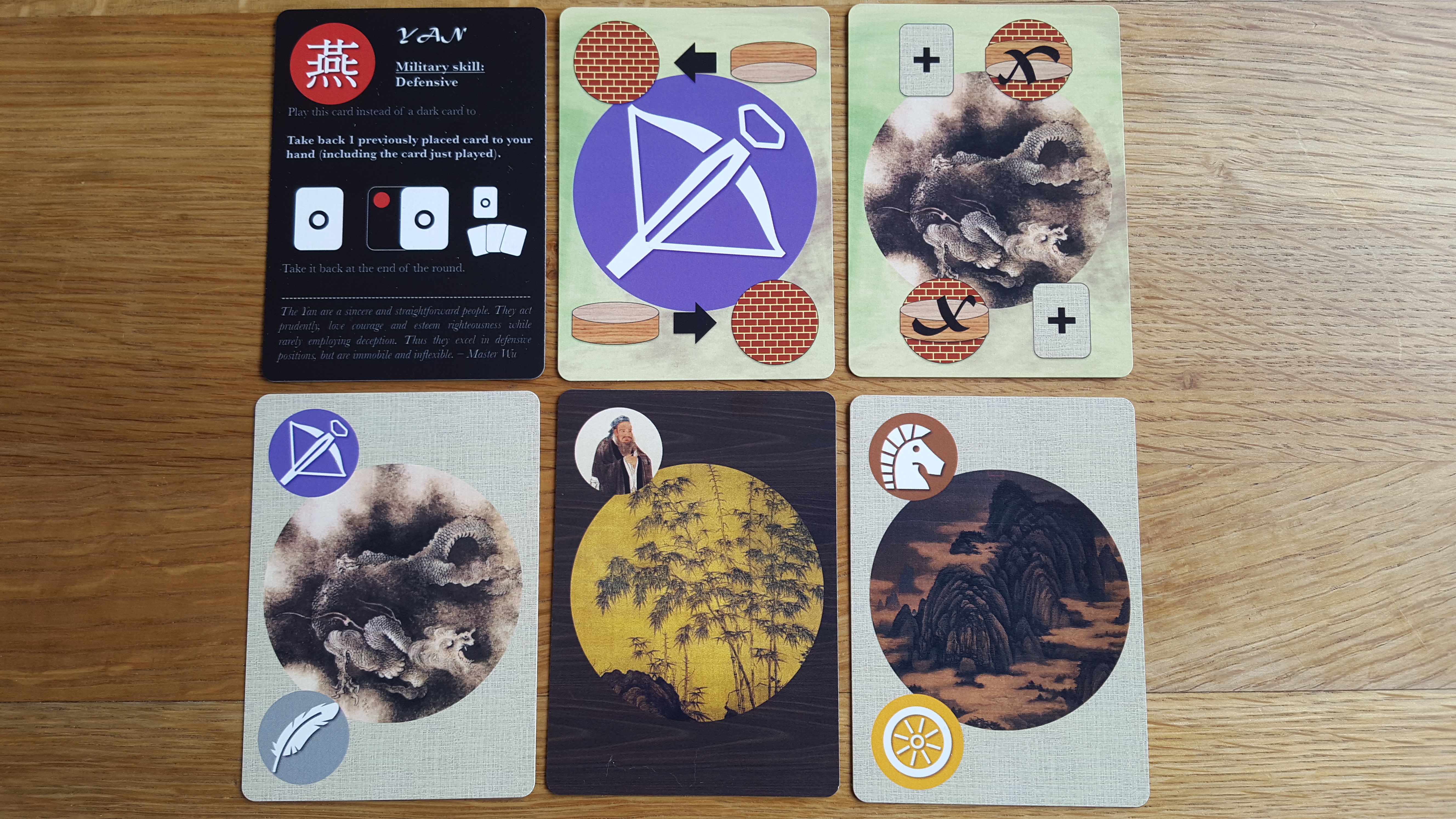
Game designWarring States started as a retheme of Cosmoclasm. The reason for this was to qualify the game for World Original Design Contest of Board Game, which required a Chinese theme. However, since this had to be a new game, a mere retheme wouldn't be enough but new mechanics would be necessary as well. The question was which mechanics that could be added to Cosmoclasm without disrupting the core mechanics. The answer was given - by the theme! The new theme for Cosmoclasm was obvious. Which other period in the Chinese history would be better suited for Cosmoclasm's struggle for hegemony than the period of the Warring States? All that was needed was to replace the factions with the dynasties, the planets with states, the battle stations with strongholds and the modern arms with historical ones (infantry, cavalry, crossbow, chariot, spy). But what could the suits (sun, moon, star and eclipse) be replaced with? I had to go to Sun Tzu for an answer and got much more than I asked for. In his Art of War, Sun Tzu speaks about four strategies: When campaigning, be swift as the wind;
To use those as suits was a simple decision but how could I possibly not use Sun Tzu's strategies for something else? Why not use them as is, as strategies in the game? The arms of Cosmoclasm are used for placing static battle stations and the only way to move them was through a later abandoned faction ability. Why not make the game more dynamic by letting superiorities in strategies be used for manipulating the strongholds? After some testing, the two pairs of strategic manipulations were determined: move own and others' strongholds and place strongholds inside and outside states. Consequently, the arms symbols were renamed tactics cards to match the strategy symbols and the immobile strongholds were replaced by mobile armies. How about the "bonus suit", the suit that lets a player play an extra card? It was another simple decisions. Since advisors played an important role during the Warring States period, it was fitting to use an advisor for the bonus suit and illustrate it with the most important influencer of that time: Confucius. With a thematic explanation for all the cards, I moved on the dynasties. This time I turned to Master Wu and his descriptions of the various dynasties was so easy to translate into the faction abilities from Cosmoclasm that no changes were necessary. Perhaps Master Wu had this game in mind? Last but certainly not least, the new mechanics solved a component challenge from Cosmoclasm: the printed chits. I had long wanted to replace them with wooden tokens but needed some of them to be printed so that a player taking control of a planet could get a control chits with the planet number. With the strategic possibilities to manipulate armies (and hence control), I wanted to reward the first player to control a state to place an extra army in the state (instead of outside the state) and thus the numbered control chits were no longer necessary! What started as a retheme of an old game turned out to become a very good game and Warring States reached the final in World Original Design Contest of Board Game! So is Cosmoclasm or Warring States the better game? It's like comparing Go and Chess. In Cosmoclasm, what you place stays and forces your to think carefully where and when your battle stations will be most useful. In Warring States, placement is still important but must be balanced against possible manipulations. Thus, both Cosmoclasm and Warring States have a purpose. Game components
|
Annotated gamesTo be completed. If you like those game mechanisms, I can also recommend: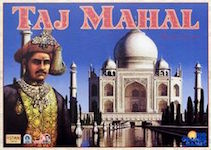
|